


The Stoney Creek crossing challenged the MVP pipeline. GEONEX™ HHB method proved effective, saving time and protecting a threatened species.
Mountain Valley Pipeline’s Stoney Creek Crossing
Mountain Valley Pipeline (MVP), a 42-inch diameter steel natural gas pipeline began construction in 2018. The herculean task of completing the nearly 303 mile route from northern West Virginia to southern Virginia through mountainous terrain deployed a variety of trenchless technologies, specifically chosen for their ability to mitigate environmental disturbance as well as overcome the adverse and challenging ground conditions.
By spring of 2023 contractors had completed approximately 282 miles of pipe installation and right of way restoration, but the final 21 miles of pipeline wouldn’t be complete and the pipeline in service until June 2024. Part of the final push to completion include crossing of the Stoney Creek in Ripplemead VA.
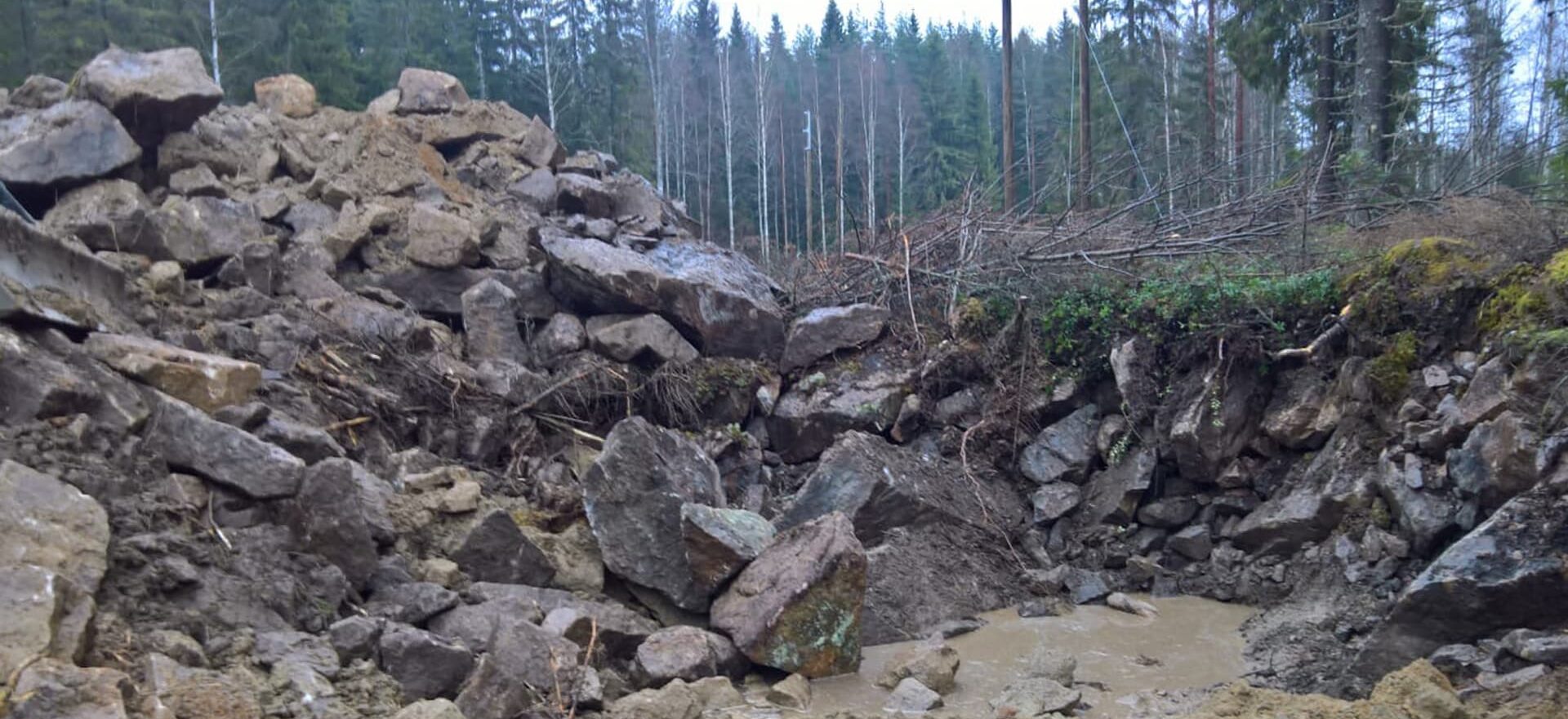
The 320 foot long Stoney Creek Crossing required the installation of 42 inch steel pipe. The bore would begin with crossing a 105 foot right of way below an active section of Norfolk Southern (NSF) rail line through cobbles and boulders. Once out of the NSF right of way, the installation would then continue below the Stoney Creek which serves as habitat for the Candy Darter, a U.S. Fish & Wildlife classified threatened species. After crossing the creek, the installation would continue until terminating outside the limits of adjacent creek braids where crews could tie in to the open cut section of the pipeline.
GEONEX™ HHB Enables Successful Pipeline Installation
The installation was completed utilizing a GEONEX™ Horizontal Hammer Boring (HHB) system by means of Atlantic Underground, a trenchless construction contractor located in Deltaville, VA. Familiar with the ground conditions of the area, Mike Kidd of Atlantic Underground was confident in the GEONEX™ system and HHB to be successful and offered several risk mitigating factors proven beneficial to this critical crossing.
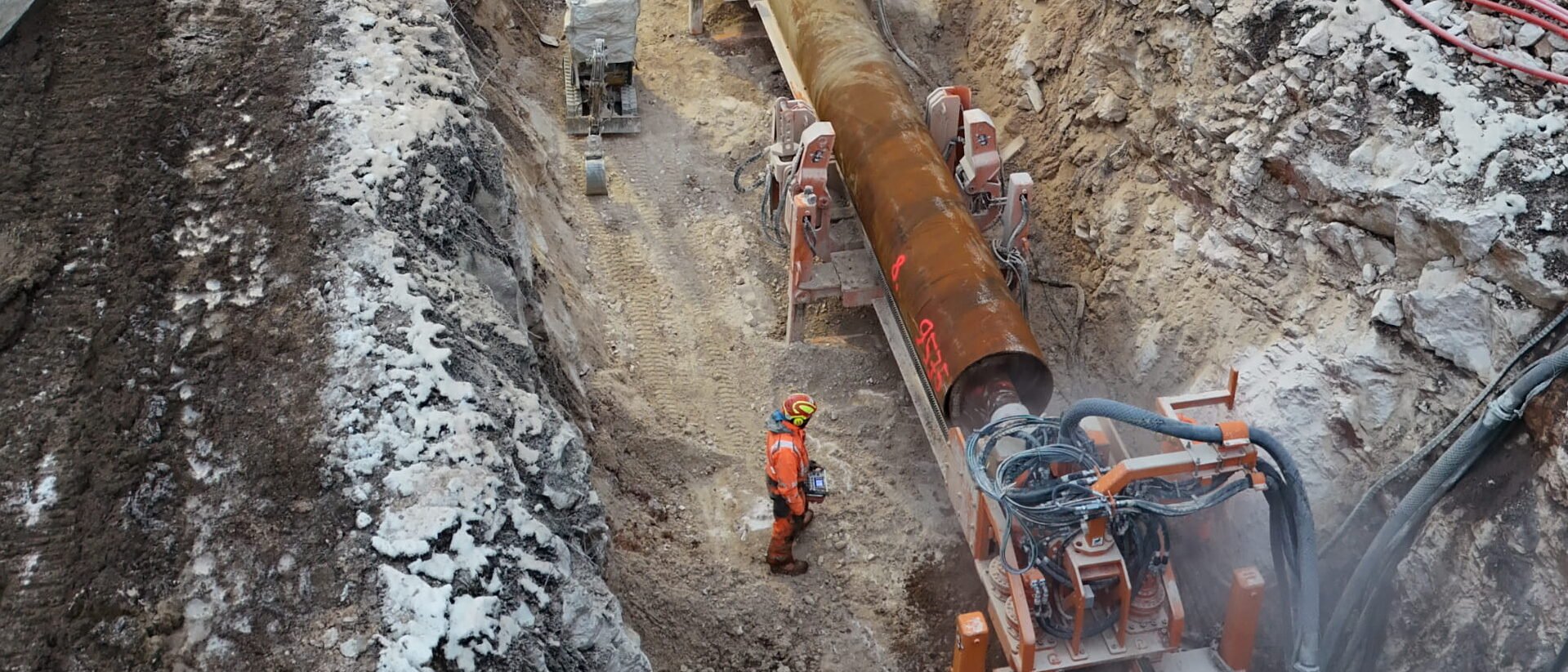
Horizontal Hammer Boring shares several characteristics with other new installation trenchless methods, combining them in a manner making the complete solution extremely effective in a variety of subsurface conditions. The pneumatic hammer of the HHB method is located within the lead piece of casing. The hammer accelerates a full face cutting head forward to break the rock and simultaneously engage an internal steel collar that pulls the casing along the bore path. Instead of pushing from the rear which often leads to deviations in a path of least resistance, pulling the casing along the path created by the cutting head results in highly predictable results.
Precision Rock Fracturing and Remote-Controlled Pipeline Installation
Carbide buttons on the cutting head create pin point fracturing of the rock, and the linear breaking action improves penetration rates through cobbles which tend to roll when utilizing other bore methods that rely on a rotating head to cut and break the material. With each stroke of the pneumatic hammer, compressed air is released through the cutting head which conveys the cuttings into the casing pipe where they are then carried back to the launch pit by hollow stem rotating auger.
Monitoring and adjusting the operating parameters is crucial to the success of HHB. The GEONEX™ system offers remote control operation with real time display and adjustment of rotation torque, forward thrust and control of air flow. Along with other features of the system, the umbilical style allows for completely hydraulic and pneumatic operation in the launch pit which is beneficial when the installation is below the ground water table and the risk of flooding in the excavation is high.
HHB System Chosen After Auger Boring and Pipe Ramming Challenges
HHB was not the first choice for the Stoney Creek Crossing. Previous attempts included auger boring and pipe ramming. Auger boring proved ineffective due to the cobbles and boulders despite the variety of cutting heads utilized. Additionally there was concern regarding the potential for an in rush of water from the saturated ground below the creek could damage the diesel engine of the auger bore machinery in the launch pit.
The length of the installation and ground formation proved difficult for pipe ramming as well. Attempts by previous contractors varied in success. The pipe ramming method only fragments the material encountered by the steel pipe and does not fragment the entire cross sectional area of the pipe being installed. While ultimately, pipe ramming was able to install a small diameter steel casing, damage and deflection of the casing required abandonment of the casing, and a search for an alternate method.
Extensive analysis of the HHB method, GEONEX™ experience and the potential risk and risk mitigating factors was performed prior to the ultimate selection and deployment of the GEONEX™ HHB system.
Precision Rock Fracturing and Remote-Controlled Pipeline Installation
Carbide buttons on the cutting head create pin point fracturing of the rock, and the linear breaking action improves penetration rates through cobbles which tend to roll when utilizing other bore methods that rely on a rotating head to cut and break the material. With each stroke of the pneumatic hammer, compressed air is released through the cutting head which conveys the cuttings into the casing pipe where they are then carried back to the launch pit by hollow stem rotating auger.
Monitoring and adjusting the operating parameters is crucial to the success of HHB. The GEONEX™ system offers remote control operation with real time display and adjustment of rotation torque, forward thrust and control of air flow. Along with other features of the system, the umbilical style allows for completely hydraulic and pneumatic operation in the launch pit which is beneficial when the installation is below the ground water table and the risk of flooding in the excavation is high.
HHB System Chosen After Auger Boring and Pipe Ramming Challenges
HHB was not the first choice for the Stoney Creek Crossing. Previous attempts included auger boring and pipe ramming. Auger boring proved ineffective due to the cobbles and boulders despite the variety of cutting heads utilized. Additionally there was concern regarding the potential for an in rush of water from the saturated ground below the creek could damage the diesel engine of the auger bore machinery in the launch pit.
The length of the installation and ground formation proved difficult for pipe ramming as well. Attempts by previous contractors varied in success. The pipe ramming method only fragments the material encountered by the steel pipe and does not fragment the entire cross sectional area of the pipe being installed. While ultimately, pipe ramming was able to install a small diameter steel casing, damage and deflection of the casing required abandonment of the casing, and a search for an alternate method.
Extensive analysis of the HHB method, GEONEX™ experience and the potential risk and risk mitigating factors was performed prior to the ultimate selection and deployment of the GEONEX™ HHB system.
HHB Technology and Environmental Care in North America
Familiarity with the method in North America while growing remains limited. HHB is more common in Europe where the bulk of GEONEX™ systems operate and serves as home to the Finnish based company who can boast of more than 200,000 meters installed. Today in North America there are 17 GEONEX™ systems which range in capacity from 5 1/2 to 48 inches diameter, of which only (3) contractors own the (5) HZR1200 machines capable of performing the 42 inch installation exist.
Environmental concerns regarding the Candy Darter and potential contamination of the Stoney Creek were a top priority. A special, non petroleum based biodegradable oil was required to be used to lubricate the pneumatic hammer. Furthermore, the release of compressed air below the creek could potentially lead to turbidity in the creek which posed risk for the Candy Darter, so strict controls were put into place to prevent disturbance to the creek.
HHB Cuts Installation Time Significantly
In March of 2024, Atlantic Underground and GEONEX received notice to proceed. Expedited delivery of equipment and seamless coordination among the parties involved enabled the installation to begin within 3 weeks of notice. Once in place, the first 105 feet of the NSF ROW was completed within 18 hours. By the end of the 6th day of work, the complete 320 feet of 42 inch casing was installed.
Upon completing the 320 foot installation, MVP crews excavated the receiving pit and removed the peripheral portion of the cutting head, allowing complete retraction of the auger string, hammer and cutting face through the casing. The GEONEX™ equipment was removed from the launch pit at which time consecutive sections of product pipe were welded onto the end of the installed steel casing. A pipe ram was used to advance the installation of the product pipe while pushing out the steel casing, providing the new complete length of product pipe installation in a little less than 3 weeks.
After completion of the installation, an MVP representative indicated that the project included over 350 bores in the same type of ground, stating “Knowing what we know now about the Horizontal Down Hole Hammer Boring method and GEONEX, we could have utilized this method on several challenging bores and saved months on the project.”